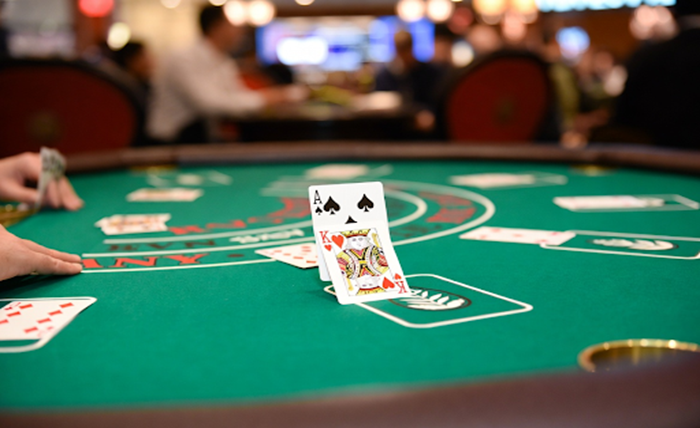
These days, there isn’t a single player who isn’t familiar with such a popular and legendary game of chance as blackjack.
Blackjack is a bank-based card game, which means that the player competes not against the other players, but against the bank; in other words, the game is played directly against the dealer. The history of this legendary game dates back to Italy, where as far back as the fifteenth century people played a primitive version of the game in which the aim was to score 31 points; however, today the game has changed significantly and taken on the form familiar to many players.
Basic rules and gameplay
With the advent of online casinos, blackjack has also moved into the digital realm, just like many other games of chance: poker, baccarat and slot machines have been transformed into online slots such as the demo Zeus, whilst roulette and even sports betting are available at online casinos. Let’s talk about the online version of the game, which is becoming increasingly popular amongst the Indian population due to gambling bans in many regions of the country, and thanks to its simplicity and accessibility.
The aim of the game is for the player to score more points than the dealer (the bank), but not more than 21 points. The game uses a standard deck of playing cards, but sometimes two to eight decks may be used to reduce the probability of a Blackjack combination. When playing with a single deck, the dealer must shuffle the cards after every hand; when using multiple decks, the deck is shuffled once a third of the cards remain. Numbered cards correspond to their face value, whilst the Jack, Queen and King are worth 10 points, and the Ace can be
In online casinos, you can play with live Indian dealers via a live stream, which adds to the atmosphere and excitement.
The basics of gameplay and card combinations
The game begins with the player placing a bet, which the dealer accepts. The dealer then deals two cards face-up from the top of the deck to the player and to themselves; they deal their own card face-down (as in the American version of the game), or deal themselves one card face-up, as in the European version.
If, after the deal, the player immediately has 21 points (blackjack) in their hand, i.e. an ace and a 10, the player announces this combination and receives a payout equal to one and a half times their bet, and a new game begins. If the dealer’s face-up card is a 10 or an ace (which increases the likelihood of a blackjack), the player with a blackjack is offered the choice of splitting the winnings 1 to 1 or continuing the game; if the dealer does not get a blackjack, the player also receives a payout of one and a half times their stake.
The dealer usually stands on 17; if the player has a total of more than 17 but less than 21, they usually win and receive a payout equal to their stake.
It is important to remember that the dealer only draws cards after the players have drawn their cards and stood; it is important to pay attention to the dealer’s face-up card on the table in order to gauge how many points they might reach.
If the dealer has more points than the player without exceeding 21, they win and the game starts again.
Basic terms in blackjack
- Split, or splitting pairs, is offered to a player if they hold two cards of the same rank; the cards are then divided into two hands. If the player agrees to split, they must place an additional bet equal to the previous bet, and the dealer deals exactly one card to each hand, after which the game continues.
- Double down is doubling the bet. The player receives exactly one card, and this is often used after splitting a pair or when the player has 10 points or an ace (11 points).
- Surrender (withdrawal from the game). After two cards have been dealt, a player may withdraw from the game if their hand is poor and unsatisfactory; in this case, half the bet is returned to the player.
- Insurance is a player’s hedge against the dealer having blackjack. It is used by players provided that the dealer’s first card is a 10 or an ace; in this case, the player places an additional bet equal to half the original stake. If the dealer’s second card results in a blackjack, the player loses the first bet but wins the second at 2 to 1.
Which type of blackjack is popular in India?
Today, there are several versions of this game: American and European; there is also a Russian version based on this game called ‘21’, as well as more local variations with specific rules.
In India, players tend to prefer the European version of blackjack, as it differs from the American version in that the dealer deals two face-up cards; furthermore, in this version, if the dealer has blackjack, players’ bets are returned, which reduces the risk of losing.
Nowadays, you can easily visit an online casino, choose a game to suit your taste with a live dealer stream, and enjoy the gaming experience.